Yükleniyor…
9 bayrakta kullanılıyor#F97316
Orange
Color of courage, passion, and religious symbolism; prominent in Indian and Irish flags.
Rengin Hikayesi
Color of Fire and Earth: Orange's Journey onto the Flag
Orange is one of the few colors historically intertwined with the imagery of fire, abundance, and power. Known in its golden-yellow form as saffron across much of Asia, this hue's ancient roots stretch from the steppes of Central Asia to the courts of Europe. In an era when dyes were scarce and precious, orange derived from the saffron plant occupied a privileged place in both fabric and culture.
Orange's systematic entry into flag design was largely driven by 17th-century European politics. The House of Orange-Nassau in the Netherlands adopted the color as its dynastic emblem and carried it onto the early republican flag; the red stripe in today's Dutch flag is historically rooted in an orange predecessor. This legacy continues to exert a profound influence on the flag choices of many nations around the world.
The Sanctity of Saffron: Religious and Cultural Symbolism
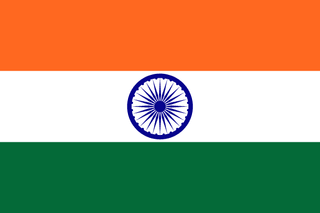
In the Hindu tradition, orange —or saffron yellow— is far more than a color; it is virtually a declaration of faith. The saffron robes worn by Hindu priests and ascetics signify the renunciation of worldly attachments and the pursuit of spiritual purification. This profound meaning is reflected in the saffron stripe at the top of the Indian flag, which represents courage, sacrifice, and the country's spiritual heritage.
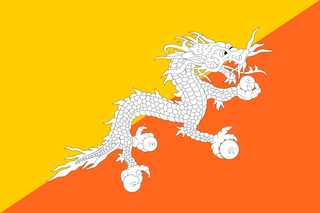
Buddhism holds orange in equally sacred regard. The large orange field on the flag of Bhutan expresses the nation's devotion to Vajrayana Buddhism—its official religion—and honors its long monastic tradition. The fact that two of Asia's most influential spiritual traditions sanctify the same color has made orange a near-universal symbol of Asian spirituality.
The orange stripe on the Irish flag carries an entirely different cultural and political meaning. Representing the island's Protestant population, the stripe is conceived as a hand extended toward Catholic Ireland, symbolized in green, with the white band of peace between them. Inspired by the French Revolution, this tricolor design was first raised in 1848.
From the Savanna to the Atlantic: Orange in African and World Flags
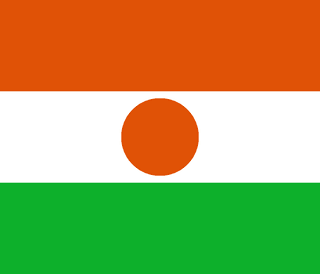
The orange found in the flags of Niger and Côte d'Ivoire is directly associated with the ochre soils of the Sahara and the sunrises of the African continent. In the flag of Niger, the upper orange stripe represents the desert and the sun while simultaneously acknowledging the geographical reality of national sovereignty. Following independence from French colonial rule after 1960, this color contributed to the construction of a distinct African identity.
Although the flag of Côte d'Ivoire is frequently confused with Ireland's due to its similar color arrangement, its meaning is entirely different. Here, orange symbolizes the northern savannas and the nation's hope for development, while green represents the southern forests and white stands for peace and unity. This choice of colors reflects a deliberate effort to encode the country's geographic diversity into its flag.
Today, orange has transcended its role as a purely religious or geographical symbol to become a vehicle for revolutionary energy, national pride, and ecological awareness. From India to Bhutan, and from Ireland to Niger, orange continues to function as a universal vexillological language onto which each culture inscribes its own distinct meaning.